
In This Article
Walk into any kitchen store and you’ll notice something odd. The “standard” chef knife was designed around a standard hand, and most of us aren’t it. If your palm is small, your fingers are short, or your wrist taps out before the onions are done, an 8-inch slab of steel can feel like wrestling a canoe paddle. That’s the quiet case for a 6 inch chef knife for small hands: same job, less drama.
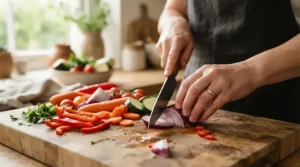
The chef’s knife has long been the do-everything workhorse of Western kitchens, and 8 inches became the default more by tradition than by physics. A shorter blade pulls the tip closer to your fingers, moves the balance point toward your grip, and lets your wrist stop compensating. Fewer corrections per cut. Cleaner dice. Less fatigue by the time dinner hits the table.
This guide is built on real spec comparisons and aggregated review themes, not marketing copy. It walks through seven real options across budget, mid-range and premium tiers. Along the way we’ll dig into a compact chef knife for small kitchens, a 6 inch chef knife for apartment cooking, lightweight handle balance, pinch grip comfort, and short blade control. Those five things decide whether a knife feels right in your hand. Prices below are ranges only and change often, so check current price before you buy. Ready? Let’s cut to it.
What Is a 6 Inch Chef Knife for Small Hands?
A 6 inch chef knife for small hands is a full-profile, all-purpose cook’s knife with a blade around 150 mm long. It pairs that blade with a slimmer handle and a lighter, more controllable balance than a standard 8-inch model. It chops, slices and minces like its bigger sibling, but gives smaller hands tighter command of the edge.
Here’s the nuance most listings skip. “6 inch” is a loose label. Some knives sold under it are true miniature chef’s knives with a deep belly. Others are narrow, closer to utility knives, and a few are santoku-style blades measuring 6.5 to 6.7 inches. Blade height matters as much as length, because it sets how much room your knuckles get above the board.
Is it a full replacement for an 8-inch? For most home prep, yes. Weeknight vegetables, chicken breasts, herbs, an onion or three. Giant squash and whole watermelons are where a longer blade earns its keep, and we’ll cover workarounds later.
Quick Comparison: 7 Best Picks at a Glance
Before the deep dive, here’s the lineup side by side. Weights are approximate figures from retailer and roundup listings, and prices are ranges that shift with promotions.
| Product | Blade | Approx. Weight | Price Range | Best For |
|---|---|---|---|---|
| Victorinox Fibrox Pro 6 Inch Chef’s Knife | 6 in, stamped | ~3 oz | $20-$45 | Beginners and tight budgets |
| Kuhn Rikon COLORI 6 Inch Chef’s Knife | 6 in, stamped, coated | Very light | Usually under $30 | Drawer storage and renters |
| HENCKELS Classic 6 Inch Chef’s Knife | 6 in, forged | ~5.6 oz | $60-$80 | All-round value |
| Wüsthof Gourmet 6 Inch Chef’s Knife | 6 in, stamped | ~6.2 oz | $50-$80 | Low-maintenance daily prep |
| Tojiro DP Santoku 170mm | 6.7 in, Japanese | ~6-7 oz | $60-$100 | Veg-heavy cooks |
| MAC Superior 6.5 Inch Santoku | 6.5 in, Japanese | Light (reviewer-reported) | $80-$100 | Edge-retention fans |
| Wüsthof Classic 6 Inch Cook’s Knife | 6 in, forged | ~6.4 oz | $100-$140 | A buy-it-once heirloom |
Read the table as a trade-off map. The Victorinox Fibrox Pro 6 Inch Chef’s Knife wins on weight and price, while the Wüsthof Classic 6 Inch Cook’s Knife wins on heft and longevity. The two Japanese-style santokus, the Tojiro DP Santoku 170mm and MAC Superior 6.5 Inch Santoku, sit in the middle and trade a little forgiveness for a keener edge.
💬 Just one click — help others make better buying decisions too!😊
Top 7 Picks: A 6 Inch Chef Knife for Small Hands, Analyzed
Each knife below gets the same treatment: what the specs mean in practice, who it suits, what reviewers keep saying, and whether the price range makes sense. Nothing here is based on personal ownership claims. It’s spec comparison plus aggregated user sentiment.
1. Victorinox Fibrox Pro 6 Inch Chef’s Knife — featherweight champion for tiny budgets
Listings put this knife near 87 grams, roughly 3 ounces, which makes it the lightest in the lineup. Your wrist notices that within minutes of dicing.
The stamped blade is ground to roughly a 15-degree edge per retailer specs, and the textured Fibrox handle is molded to stay grippy when wet. In practice, slick onion juice won’t send the handle sliding, and the thin spine glides through carrots instead of wedging. One caveat the spec sheet won’t shout: a retailer notes the blade is only about 1.25 inches wide. That makes it behave like a utility knife, so knuckle clearance is tighter than on deeper blades.
Based on the spec comparison, this is the smart first purchase for beginners, or for anyone who wants to test whether a short blade suits them before spending real money. Cook’s Illustrated named it a top pick for pint-size cooks and noted that adult testers liked it too, while still recommending 8 inches for most adults.
Reviewers consistently call it very sharp for the price, and some pair it with a longer Japanese knife because the thin spine feels nimble.
Pros:
- ✅ Lightest knife in this roundup
- ✅ Slip-resistant handle, even with wet hands
- ✅ Sharp out of the box at a budget price
Cons:
- ❌ Narrow blade limits knuckle clearance
- ❌ Plastic handle feels less premium
Expect a price in the $20-$45 range depending on retailer. Verdict: unbeatable value for the weight.
2. Kuhn Rikon COLORI 6 Inch Chef’s Knife — the sheathed sidekick for tight drawers
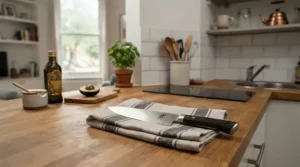
Bright colors and a built-in safety sheath make this the most “toss it in a drawer” friendly pick. Roundups consistently list it as lightweight with a hand-ground blade, and the sheath is the real feature.
That sheath matters more than it sounds. In a small kitchen, loose knives get shuffled against pans and whisks, which dulls edges and nicks fingers. A sheathed blade protects both, and it makes the knife easy to pack for a holiday rental or a friend’s kitchen.
The blade is coated, which is meant to help food release as you slice. Treat that as a care instruction too. Coated blades prefer gentle honing and no scouring pads, so skip the abrasive sponge.
My honest read, based on the specs: this suits renters, students and secondary-kitchen cooks who want a competent second knife rather than a lifelong main blade. Reviewers in roundups praise it for cleanly slicing tomatoes, which is the classic cheap-knife test, and they flag the plain, lightweight feel as the trade-off.
Pros:
- ✅ Safety sheath protects blade and fingers
- ✅ Very light for long prep sessions
- ✅ Budget-friendly entry into short blades
Cons:
- ❌ Coated blade needs gentler care
- ❌ Basic handle lacks premium feel
It’s typically in the budget tier, usually under $30, so check current price. Verdict: great travel and backup knife, modest as a main.
3. HENCKELS Classic 6 Inch Chef’s Knife — the safe, forged crowd-pleaser
Think of this as the “I don’t want to overthink it” pick. It’s forged, with a bolster that gives you a visible, tactile stop for your pinch grip.
Roundups list it near 5.6 ounces, noticeably lighter than the premium forged options but heavier than the stamped budget models. That middle weight is a sweet spot for small hands. You get enough mass to let the blade do the work on a dense carrot without muscling it, and not so much that your forearm complains.
Reviewers on retailer pages echo a theme that matters here: the 6-inch size feels easy to handle, not too long, with a good grip and balance. Several describe reaching for it over bigger knives for everyday tasks. A large review pool, rather than a handful of reviews, is itself useful evidence of consistent quality.
Who’s it for? The cook who wants one dependable knife, doesn’t care about Japanese steel mystique, and values forgiving German-style durability. It’s also a sensible gift for a first apartment.
Pros:
- ✅ Forged build with a useful bolster
- ✅ Balanced weight, not tiring or flimsy
- ✅ Large base of satisfied buyers
Cons:
- ❌ Bolster complicates sharpening the heel
- ❌ Hand-wash care needed
Expect roughly the $60-$80 range. Verdict: the best everyday value if you want forged quality without a premium bill.
4. Wüsthof Gourmet 6 Inch Chef’s Knife — laser-cut lightness with zero fuss
The Wüsthof Gourmet 6 Inch Chef’s Knife is the stamped, laser-cut cousin of the forged line. Roundups list it around 6.2 ounces with a synthetic handle that, in one reviewer’s words, “never asks for special care.”
That description deserves translation. A synthetic handle won’t swell, crack or darken like untreated wood. It’s the right call if your kitchen sink is a shared, soggy battlefield. The blade is German-style, with a classic curved belly for rocking cuts, which pairs naturally with a pinch grip.
One roundup frames it as the pick for people whose main complaint about big knives is weight drifting toward the tip. With a shorter blade, that drift shrinks, and the knife stays close to your fingers. In other words, balance does the work your muscles would otherwise do.
The compromise is feel. Stamped knives lack the bolster-to-heel mass of forged ones, so the knife feels more nimble and less authoritative. Cooks who like a hefty, planted chopper may find it a touch breezy.
Pros:
- ✅ Light, maneuverable German-style blade
- ✅ Low-maintenance synthetic handle
- ✅ Familiar rocking-cut profile
Cons:
- ❌ Lacks forged-knife heft
- ❌ No bolster for pinch reference
Check current price; it generally sits in the $50-$80 range. Verdict: excellent middle path between budget and premium.
5. Tojiro DP Santoku 170mm — the Japanese value pick for vegetable lovers
At 6.7 inches this is technically a santoku, but its flat belly and tall blade suit vegetable-heavy cooking, and it slots neatly into this size class. Listings describe a cobalt alloy steel core with stainless cladding and a reinforced wood handle, and weight is listed near 190 grams, so about 6-7 ounces.
Here’s why it deserves a spot. A roundup argues that the 6.7-inch profile gives roughly the effective slicing edge of an 8-inch chef knife in a more compact package. Flatter belly means less rocking and more push-cut chopping, which many small-handed cooks find easier to control.
Reviewer sentiment on the Tojiro DP line leans toward “great bang for the buck” and “an excellent starter Japanese knife.” Reviewers also note boring, outdated packaging, so don’t buy it for the unboxing.
Care is the catch. Harder Japanese steel takes a finer edge but dislikes twisting, bones and the dishwasher. Dry it after use.
Pros:
- ✅ Keen edge for the price
- ✅ Flat profile suits push-cut chopping
- ✅ Tall blade gives knuckle clearance
Cons:
- ❌ Harder steel can chip if twisted
- ❌ Basic presentation and packaging
Expect roughly the $60-$100 range. Verdict: the best entry point into Japanese-style sharpness.
6. MAC Superior 6.5 Inch Santoku — sub-zero tempered edge retention
Retailer specs describe sub-zero tempered molybdenum vanadium steel at roughly 61 Rockwell hardness, a ~15-degree double-bevel edge, a 1.87-inch blade height and a 25-year warranty. Translation: it holds an edge longer than most knives at this size, and its tall blade leaves your knuckles plenty of room.
A sand-blasted strip along the edge adds small air pockets that reduce food drag, which helps with sticky potatoes and cucumbers. The pakkawood handle is described as large and elevated for clearance. That’s a plus for knuckle room, but very small hands might find it chunky. One reviewer on the retailer page says it is very light and the handle fits well for someone with small hands, which suggests fit varies by person.
Another buyer, a working cook, said they bought it as a backup to an 8-inch and found themselves choosing it whenever possible. That’s a telling pattern for anyone wondering whether short blades can be primary knives.
Pros:
- ✅ Excellent edge retention
- ✅ Tall blade protects knuckles
- ✅ Strong warranty from the maker
Cons:
- ❌ Handle may be bulky for tiny hands
- ❌ Priced above the budget santokus
Plan on the $80-$100 range. Verdict: a premium-feeling performer for edge-obsessed cooks.
7. Wüsthof Classic 6 Inch Cook’s Knife — the buy-it-once heirloom
The forged heavyweight of the group. Specs list full-tang construction, precision-edge technology on a 58 Rockwell blade, a triple-riveted synthetic handle and a weight near 6.4 ounces. That’s heavier than the stamped options, but still light in absolute terms.
What does that mass buy? Momentum. The knife falls through dense vegetables on its own weight, so small hands push less and guide more. It’s also one of the few forged 6-inch cook’s knives still widely made, and one reviewer on the brand’s site worried aloud about discontinuation because the size is so rare.
Reviewer sentiment is warm: easy to hold, comfortable for smaller hands, “perfect size.” Two honest complaints appear in the mix. One buyer reported it didn’t fit a block slot, and another reported a duller-than-expected edge on arrival. Hand-washing is mandatory.
Pros:
- ✅ Forged full-tang durability
- ✅ Planted weight reduces wrist effort
- ✅ Rare forged option in a 6 inch size
Cons:
- ❌ Most expensive pick here
- ❌ Hand-wash only, no dishwasher
Budget in the $100-$140 range. Verdict: best long-term investment if you cook often.
✨ Don’t Miss These Exclusive Deals!
🔍 Take your 6 inch chef knife for small hands search to the next level with these carefully selected knives. Click on any highlighted product name to check current pricing and availability. A sharper, lighter prep routine is one purchase away!
How to Choose a 6 Inch Chef Knife for Small Hands
Choosing well takes five minutes and saves a drawer full of regret. Here’s the order that matters.
- Check weight first. Anything between 3 and 6.5 ounces is sensible for small hands. Lighter reduces fatigue, heavier adds cutting momentum.
- Measure blade height. Taller blades, around 1.8 inches or more, give knuckles breathing room. Narrow blades feel precise but nip knuckles on the board.
- Test the pinch point. Your thumb and forefinger should land comfortably where blade meets handle, so look for a bolster or a flat, clean heel.
- Match handle width to your palm. Slimmer is not always better. Too thin and your grip cramps, too thick and your fingers can’t close.
- Pick steel for your habits. German-style steel forgives clumsy care. Harder Japanese steel holds an edge longer but dislikes twisting and dishwashers.
- Decide forged versus stamped. Forged adds heft and a bolster. Stamped saves weight and money.
- Count your maintenance tolerance. If you won’t hand-dry knives, favor the lower-maintenance, synthetic-handled options.
Notice what’s missing: brand prestige. A cheap knife that fits beats an expensive one that doesn’t.

6 Inch vs 8 Inch Chef Knife: What You Really Give Up
The honest answer: less than you’d think, and more in specific scenarios. Cook’s Illustrated, in its review of the Victorinox 6-inch, still recommends an 8-inch for most adult cooks, but concedes the 6-inch is great for newer cooks and for adults who like working with a smaller blade.
| Factor | 6 Inch Chef Knife | 8 Inch Chef Knife | Better For |
|---|---|---|---|
| Control | Tight, close to fingers | Looser, more reach | 6 inch for precision |
| Weight and fatigue | Lighter, less wrist strain | Heavier, more momentum | 6 inch for small hands |
| Big produce | Needs halving first | Slices melons and squash whole | 8 inch for large items |
| Storage | Fits tiny drawers and blocks | Needs more room | 6 inch for compact kitchens |
| Learning curve | Gentler for beginners | Steeper | 6 inch for beginners |
| Examples | Victorinox Fibrox Pro, HENCKELS Classic 6 Inch | Same lines in 8 inch | Depends on task |
The table shows the 6 inch winning most daily scenarios, with the longer knife only dominating on oversized produce. If your cooking is mostly dinner for one to four people, the Victorinox Fibrox Pro or HENCKELS Classic 6 Inch will cover nearly everything. The real cost is a handful of cutting jobs that need an extra halving step.
Compact Chef Knife for Small Kitchens: Storage, Safety and Workflow
A compact chef knife for small kitchens isn’t just about blade length. It’s about how the whole tool lives in a cramped space.
Small kitchens usually mean small cutting boards, and a shorter blade fits them without hanging over the edge or hitting the backsplash. A 6-inch blade needs a shorter sweep, so you won’t knock a spice jar mid-chop.
Storage matters too. A shorter knife slides into a narrow drawer, a slim magnetic strip, or a compact block. Beware of one detail: a reviewer of the Wüsthof Classic 6 Inch Cook’s Knife noted it didn’t fit their existing brand block slot, so measure before you assume. The Kuhn Rikon COLORI 6 Inch Chef’s Knife solves the problem differently with its sheath, protecting both the blade and whatever else shares the drawer.
Safety deserves a sentence. Cramped counters mean elbows bump, so a knife that stays under control matters. A light handle and short blade give you faster stop-and-correct reflexes. Pair that with a damp towel under the board so it doesn’t skate across the counter.
6 Inch Chef Knife for Apartment Cooking: One Blade, Real Meals
Apartment cooking has its own rhythm: smaller portions, fewer gadgets, a lot of improvisation. A 6 inch chef knife for apartment cooking suits that rhythm because it covers about 90 percent of tasks without dominating the space.
Think of the typical week. Dicing an onion, mincing garlic, slicing chicken, cubing sweet potato, chopping herbs, trimming peppers. All of it sits comfortably inside a 6-inch blade’s range. Where you’ll notice the limit is the occasional winter squash, which you can handle by cutting it into halves or quarters first.
Noise and mess matter in shared buildings, too. A shorter, lighter knife encourages slower, more deliberate cuts, which means less banging and fewer escaped onion pieces. The Wüsthof Gourmet 6 Inch Chef’s Knife and HENCKELS Classic 6 Inch Chef’s Knife are well-suited here because they’re forgiving and don’t demand ritual care. And if you rent, the lower-priced Victorinox Fibrox Pro 6 Inch Chef’s Knife is the one you won’t panic about losing in a move.
Lightweight Handle Balance: What the Numbers Mean
Balance gets thrown around like a vibe. It’s actually physics, and it’s measurable by feel. Rest the knife on your extended index finger just ahead of the handle. Where it levels out is the balance point, and a good small-hand knife balances near the bolster or the front of the handle.
Why does lightweight handle balance matter more at 6 inches? A shorter blade has less mass out front, so a heavy handle can tip the whole knife backward and make the edge feel vague. A light, well-matched handle keeps the tip responsive. The Victorinox Fibrox Pro 6 Inch Chef’s Knife, at roughly 3 ounces, is the extreme example: nimble to the point of feeling almost like a paring knife with a bigger blade.
Forged knives like the Wüsthof Classic 6 Inch Cook’s Knife shift balance rearward at the bolster, creating the “planted” feel. That’s good for chopping dense produce and slightly tiring for hours of fine mincing.
The practical rule: if your wrist tires, go lighter. If your cuts wander, go slightly heavier with a bolster to anchor your pinch grip.
Pinch Grip Comfort: A Practical Usage Guide
The pinch grip is the single biggest upgrade you can make to knife control, and it works especially well on short blades. Tasting Table’s guide to holding a knife describes it as pinching the blade between thumb and forefinger right above the handle, then wrapping the remaining three fingers around the handle. Keep it firm but relaxed.
For small hands, pinch grip comfort depends on three things you can check before buying:
- Spine thickness. A thick, sharp spine digs into your forefinger over time. Thinner or rounded spines are friendlier.
- Bolster shape. A smooth, slightly rounded bolster gives a stop without a pressure point. The HENCKELS Classic 6 Inch and Wüsthof Classic 6 Inch are forged options with bolsters.
- Heel finish. Some Japanese knives, such as the Tojiro DP Santoku and MAC Superior Santoku, have a clean, flat heel that makes the pinch feel natural without a bolster.
A simple setup drill: lay the knife flat across two fingers to find its balance point, then pinch right there. Practice slow, empty rocking motions before touching food. Expect an awkward first week, because your hand is learning a new job. After that, the knife stops feeling like an object and starts feeling like a fingertip extension.
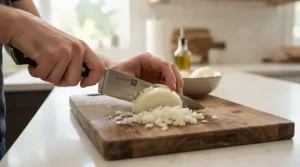
Short Blade Control: Why Less Steel Means More Precision
Short blade control is the quiet reason people fall in love with 6-inch knives. A shorter blade means less leverage working against you, so small movements at the handle translate into small movements at the tip.
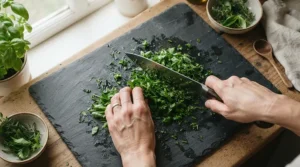
That precision shines on tasks that punish sloppiness: thin-slicing shallots, mincing herbs without bruising, trimming chicken, and cutting uniform cubes for even cooking. A longer blade needs a longer arc and a more committed swing. A shorter one lets your fingers steer.
Control also changes how you use the cutting board. With a 6-inch blade you’ll naturally favor push-cuts and short rocking motions, and the flat-profile santokus, the Tojiro DP Santoku and MAC Superior Santoku, encourage this even more. German-style belly knives like the Wüsthof Gourmet 6 Inch Chef’s Knife reward rocking.
The limit is length itself. You can’t saw through a large roast in one pass. But for the vast majority of home tasks, control beats reach, and that’s the trade this size makes honestly.
Common Mistakes When Buying a 6 Inch Chef Knife for Small Hands
Most regrets come from the same handful of errors. Skip these and you’ll skip the drawer-of-shame.
- Buying on length alone. Two “6 inch” knives can feel completely different if one is narrow and the other has a deep blade. Check blade height.
- Ignoring handle thickness. A chunky handle on a short blade defeats the point. Slim is not always better, but oversized rarely helps tiny hands.
- Chasing the hardest steel. Super-hard blades chip if you twist them through squash or pry at bones. If your technique is still developing, forgiving steel is a better teacher.
- Skipping the care routine. Dishwashers dull and corrode good knives. The premium options here are hand-wash only.
- Assuming premium means better fit. The best knife for you is the one whose balance and handle match your grip, whatever the price tag.
- Forgetting storage. Measure your drawer or block before you buy.
Real-World Scenarios: Which Knife Fits Which Cook?
Matching knife to life beats matching knife to hype. Here are three profiles built from the specs above.
The student with a $30 budget and a shared kitchen. Cooks four nights a week in a cramped space with questionable cutting boards. The Victorinox Fibrox Pro 6 Inch Chef’s Knife is the logical choice: light, slip-resistant, and inexpensive. If the knife has to live loose in a shared drawer, the Kuhn Rikon COLORI 6 Inch Chef’s Knife with its sheath is the safer bet.
The couple in a one-bedroom with a $100 ceiling. They cook most nights, hate maintenance, and want one knife they won’t replace. The Wüsthof Classic 6 Inch Cook’s Knife fits the long-term logic, while the HENCKELS Classic 6 Inch Chef’s Knife lands the same everyday usefulness at a lower spend.
The veggie-forward home cook who loves a sharp edge. Cooks several times a week, enjoys honing and sharpening, and mostly slices produce. The Tojiro DP Santoku and MAC Superior Santoku fit this profile because of their flat profiles and sharp, tall blades. The MAC Superior Santoku earns the nod for edge retention, while the Tojiro DP Santoku wins on price.
Notice that none of these profiles needs an 8-inch knife.
Problem → Solution: Fixing the Frustrations of a Short Blade
Short blades come with predictable annoyances. Here are the common ones and what to do about them.
Problem: Knuckles tap the board. Solution: choose a taller blade, like the roughly 1.87-inch height listed for the MAC Superior Santoku, and raise the board on a damp towel if your counter is low.
Problem: The blade feels too short for squash. Solution: halve the vegetable first, lay it flat for stability, then slice. Safety first: a stable cut surface matters more than speed.
Problem: The handle slips when wet. Solution: the textured handle on the Victorinox Fibrox Pro 6 Inch Chef’s Knife is built for this, and a dry towel under the board helps everyone.
Problem: Fingers feel exposed. Solution: use the claw guide hand. Curl your fingertips inward and let the blade ride your knuckles, as the Wikibooks knife skills guide describes. It also notes that many food-service professionals use the pinch grip for maximum control, while untrained cooks often wrap all four fingers and the thumb around the handle.
Problem: The wrist aches after long prep. Solution: switch to a lighter knife or cut in shorter sessions. Heavier is not better if your wrist is the bottleneck.
Long-Term Cost and Maintenance: Is Paying More Worth It?
A knife’s real price is spread over years. A knife in the $100 range used four nights a week for five years comes to roughly ten cents per cooking session, assuming it stays sharp and healthy. Seen that way, the gap between a $30 and a $120 knife is smaller than it looks.
| Product | Price Tier | Style | Care Level | Best For |
|---|---|---|---|---|
| Victorinox Fibrox Pro 6 Inch Chef’s Knife | Budget | Stamped | Low | First-time buyers |
| Kuhn Rikon COLORI 6 Inch Chef’s Knife | Budget | Stamped, coated | Gentle | Travel and backup |
| HENCKELS Classic 6 Inch Chef’s Knife | Mid | Forged | Moderate | Everyday value |
| Wüsthof Gourmet 6 Inch Chef’s Knife | Mid | Stamped | Low | Easy daily use |
| Tojiro DP Santoku 170mm | Mid | Japanese | Moderate | Veg prep |
| MAC Superior 6.5 Inch Santoku | Mid-High | Japanese | Moderate | Edge retention |
| Wüsthof Classic 6 Inch Cook’s Knife | Premium | Forged | Hand-wash | Long-term keeper |
The table shows that higher cost usually buys either forging, steel quality or both, not magic. A budget pick like the Victorinox Fibrox Pro 6 Inch Chef’s Knife can still be a great long-term value if you hone it regularly and sharpen it when needed. Maintenance habits matter more than sticker price: hand-wash, dry, store safely, hone often.
FAQ
❓ Is a 6 inch chef knife big enough for everyday cooking?
❓ What knife size is best if I have small hands?
❓ Can a 6 inch chef knife cut butternut squash safely?
❓ Is a santoku better than a Western-style 6 inch knife for small hands?
❓ How often should I hone and sharpen a short chef knife?
Conclusion
Here’s the plain truth: the best knife isn’t the biggest one, it’s the one you actually enjoy picking up. For small hands, a 6 inch chef knife for small hands trades a little reach for a lot of control, comfort and confidence. Once your wrist stops compensating and your fingers start steering, cooking feels less like work.
If budget rules, the Victorinox Fibrox Pro 6 Inch Chef’s Knife is the featherweight value pick. For forged balance without a premium bill, the HENCKELS Classic 6 Inch Chef’s Knife is the safe bet. If you want a once-and-done heirloom, the Wüsthof Classic 6 Inch Cook’s Knife earns the splurge. Veggie lovers who want Japanese sharpness should look at the Tojiro DP Santoku or the MAC Superior Santoku. And if low-maintenance daily use is the goal, the Wüsthof Gourmet 6 Inch Chef’s Knife keeps things easy, while the Kuhn Rikon COLORI 6 Inch Chef’s Knife covers backup duty and tight drawers.
Whatever you choose, remember the five pillars: compact chef knife for small kitchens, 6 inch chef knife for apartment cooking, lightweight handle balance, pinch grip comfort and short blade control. Get those right and the rest is just dinner.
✨ Ready to upgrade your prep? 🔪 Click any highlighted knife above to check current pricing and availability, and bring home the blade your hands have been waiting for!
Recommended for You
- Hollow Edge Santoku for Sticky Potatoes: 7 Best Picks (2026)
- Carbon Steel Chef Knife That Resists Rust: 7 Ultimate Picks 2026
- Left Handed Chef Knife for Lefty Home Cooks: 7 Proven Picks 2026
Disclaimer: This article contains affiliate links. As an Amazon Associate, I earn from qualifying purchases. If you purchase products through these links, we may earn a small commission at no additional cost to you.
✨ Found this helpful? Share it with your friends! 💬🤗
